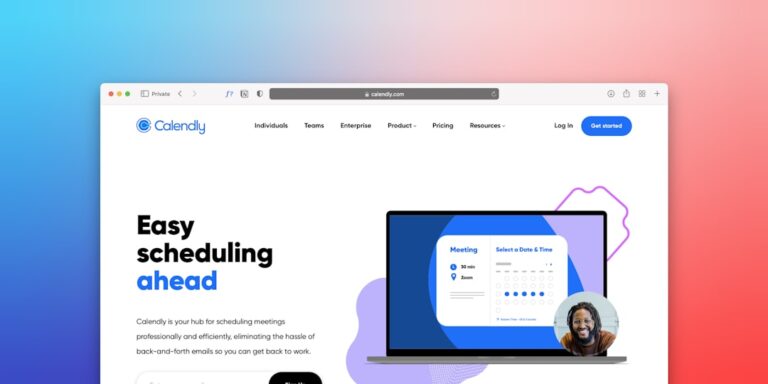
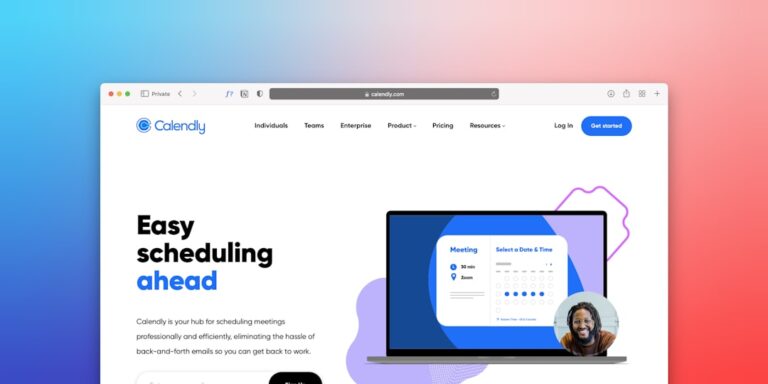
Cal.com vs Calendly: Open-Source Scheduling for Small Teams
Cal.com positions itself as the open-source Calendly. The pitch resonates with founders who like “open” and “cheaper.” The reality at 1-5 seats is messier: Cal.com has caught up in features, but the operational economics of self-hosting still favor Calendly for most small teams.
The TL;DR comparison
| Aspect | Calendly | Cal.com |
|---|---|---|
| Free tier | 1 event type | Unlimited event types |
| Paid solo | $12/mo | $12/mo for 5 users |
| Self-host | No | Yes |
| Team round-robin | Mature | Less polished |
| Integrations | 100+ | 50+ |
Free tier comparison
Cal.com’s free tier is meaningfully more generous than Calendly’s. Calendly free: 1 event type, basic confirmations, no group events, no team features. Cal.com free: unlimited event types, group events, custom branding, multiple calendars. For a solo user, Cal.com free is genuinely usable indefinitely.
Paid tier comparison
At $12/month, Calendly Standard gives you solo user features. Cal.com Teams gives up to 5 users — a much better team deal. For a 3-5 person team, Cal.com Teams beats Calendly Team plan at $16/seat/month.
Self-hosting Cal.com
If you self-host, Cal.com costs $5-20/month VPS plus hidden costs: 3-6 hours initial setup, 30-60 min monthly maintenance, Google/Outlook OAuth configuration, SMTP setup, outage exposure when VPS goes down. For most small businesses, that overhead exceeds the price savings.
Solo use: both cover the basics
For an individual user, both tools cover the basics equivalently: calendar integration (Google/Outlook/iCloud), custom event types with availability rules, buffer time, embeddable widget, Zapier integration. Differences are polish — Calendly’s UX is smoother; Cal.com has more keyboard shortcuts and feels developer-friendly.
Team use: differences widen
For teams, Calendly leads on round-robin sophistication, routing forms (Calendly’s are more mature), admin controls, and reporting. Cal.com’s team features work but are less polished. For sales teams or recruiters where scheduling is core, Calendly’s team features still win.
When to pick Cal.com (cloud)
- You’re a 3-5 person team and want budget-friendly scheduling
- Your business values supporting open-source projects
- You need unlimited event types on the free tier
- You like the keyboard-first, developer-aesthetic UX
When to pick Calendly
- You’re solo and want the smoothest experience
- You’re a sales-led team where scheduling is a high-stakes funnel step
- You need mature round-robin or routing forms
- You value integration breadth
When to self-host Cal.com
- You have devops capacity already running other services
- You have compliance reasons requiring data residency
- You’re managing 50+ users where cloud pricing matters
What both tools do badly
- Multi-organization handling — both clunky if you book on behalf of multiple businesses
- Complex group scheduling with 5+ required attendees — use Doodle or Microsoft Bookings
- Tight integration with non-standard CRMs — both rely on Zapier
The migration story
Switching between Calendly and Cal.com is straightforward — event types, availability, integrations rebuild in 1-2 hours. The friction is updating booking URLs anywhere they’re published. Plan a half-day for a clean migration.
Key Takeaways
- For 1-5 person teams, Calendly’s polish + maturity wins for most use cases.
- Cal.com cloud at $12/month covers 5 users — much cheaper for small teams.
- Cal.com self-hosted economics don’t work for most small businesses — operational overhead exceeds savings.
- Self-hosting scheduling is risky — broken booking link is a lost prospect.
- Sales-led teams should default to Calendly; lighter needs work with Cal.com cloud.
- Don’t optimize for $5/month savings on a critical customer touchpoint.
Frequently Asked Questions
Is Cal.com really feature-equivalent to Calendly now?
For core scheduling functionality, yes. Where Calendly still leads: round-robin sophistication, routing forms, mobile polish, and enterprise features. For most small business needs, those gaps don’t matter.
How hard is Cal.com self-hosting?
Medium difficulty. The Docker setup is well-documented; the harder part is Google/Microsoft OAuth and email sending. Plan a focused weekend.
Can I run both simultaneously?
Yes, but it’s confusing for clients. Pick one canonical link. Running both during a transition month is fine; running both permanently is a flag.
What about Acuity, SavvyCal, or Microsoft Bookings?
Acuity is good for service businesses. SavvyCal is excellent for individual scheduling. Microsoft Bookings is fine if you’re deep in Microsoft 365. All credible alternatives at $10-25/month per user.
Does Cal.com’s open-source nature matter in practice?
For most users, no. The cloud product feels identical to using Calendly. Open-source matters for some buyers (privacy-focused, dev-tools users) but doesn’t impact day-to-day experience.